

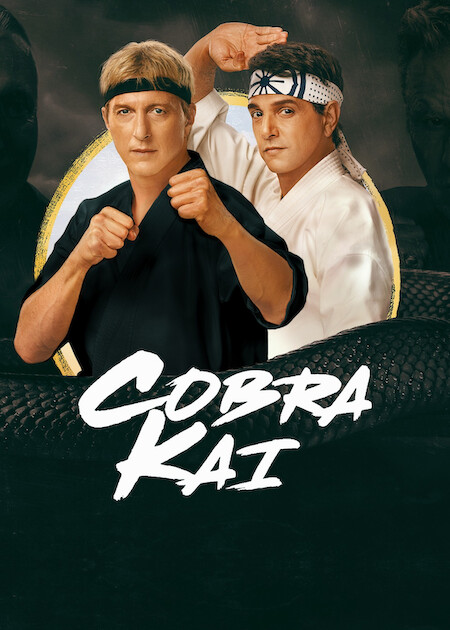

Hey, remember when I used to talk about the Karate Kid and stuff? For the five or so people who read it weekly, I’ll return to my AP Productions universe soon enough, but I thought I’d take a breather and flex my creative muscles in another direction for a bit. What better way to do that than to talk about the Karate Kid’s revival.
In the wake of 80s and 90s reboots, Cobra Kai came on the scene in 2018, first on YouTube Red and then on Netflix. I didn’t think much of it at first since I didn’t think I needed a Johnny Lawrence series, but when two episodes hit YouTube for free, curiosity got the better of me and I liked what I saw. It actually reignited my interest in the Karate Kid franchise, which led me to go back and rewatch the original movie series. In this retrospective, I plan to discuss the good, the bad, and the ugly. Well, maybe not ugly. Probably the moderately attractive if I’m being honest. Anyway, without further ado…
Part 1 – The Best Around

New Meets Old
When it comes to modern nostalgia reboots, there’s a right way and a wrong way to go about it. The wrong way to do it is to disrespect the originals, “deconstruct” the old guard into oblivion, and promote a new set of cookie-cutter heroes as somehow far superior (looking at you Star Wars episodes 7 through 9). The right way to do it is to show how the old guard has changed over the years while staying true to everything that made them great. Meanwhile, a new set of nuanced characters can get a chance to shine without needing to take a crap on what came before.
Cobra Kai brought Johnny Lawrence and Daniel Larusso back for a new story, but the series also introduced a new cast of young characters who all had their own stories to tell. There were tons of references to the original series and I think just about every major character from the film franchise came back for at least a cameo, giving elder millennials such as myself, something to invest in. In fact, this show redeemed Karate Kid 3 in my eyes by reintroducing Terry Silver as a serious threat. The nostalgia was just that strong.
And yet, the show reached out to younger viewers by introducing teenage characters like Miguel, Sam, Robbie, Tori, etc. who all had compelling personalities and storyarcs. I was just as invested in what was going on with the new characters as I was with the OG characters. Respect for the franchise while carrying it in new directions carried over to the humor as well.
Lampshade Hanging
Okay, let’s face it, the Karate Kid franchise was still a bit silly. There are a ton of memes centered around how weirdly invested the characters are in a local karate tournament for teens or how odd it is that Daniel Larusso managed to come across three different psychotic karate-bullies in his last year of high school. Cobra Kai lamp-shaded this a lot through the dialogue. Most of the snark came from Amanda, Daniel’s wife, who supplied a lot of the comedy where this is concerned. I loved all the pot-shots she took at Daniel, Johnny, Chosun, etc.
But as I said before, the show never dismissed the franchise entirely. There was a lot of drama involved and it knew when to get serious. At the end of season two, there was a huge brawl throughout the school that left one kid with a damaged spine and another with a nasty scar from a bladed weapon. It wasn’t treated lightly at all and the fallout from that riot carried over to the next season. There were serious repercussions for the characters’ actions in this show, which gave it just the right amount of gravitas.
The Complexities of Bullying
Bullying has always been a theme in the franchise and this series was no different. Cobra Kai explored all manners of bullying such cyber-bullying or workplace bullying, but it also showed the cycle of abuse involved. Many characters started off getting pushed around at school, only to become bullies themselves once they got some fighting lessons. As the saying goes, “Hurt-people, hurt people.”
The show even shed some light on the backstories of the original Karate Kid villains, explaining why they ended up the way they did. Usually, they went through some form of abuse, which gave them a lot of sympathy and nuance that elevated them beyond “80s villains”. Most of the bad guys in the franchise, both old and new, had some form of redemption at some point in the show and when a normally-kind character fell from grace, it was believable when considering what they had gone through. That leads me to the next point.
No Villains (well… mostly)
As I said above, the series showed that rivalries are a messy and complicated thing. Johnny and Danny exemplified this. Throughout the show, their philosophies, personalities, and karate styles created conflict that went beyond their old high school grievances. Their flaws and weaknesses were constantly on full display and often times, both senseis were right and wrong about different things. The same goes for the kids who often bounced back and forth between different dojos based on what they were going through and for the most part, it never felt forced or old (more on that later). Of course, there were one or two guys who were pretty much evil from start to finish, just to make things interesting.
I guess what I’m saying is, this show has balance, much like a master of karate.
Part 2 – Your Karate’s a Joke

Now that I’ve gotten into the good stuff, let’s see where the show could’ve improved.
Adult Danny and Johnny don’t mesh well with their teenage counterparts
In my original Karate Kid Trilogy retrospective, I mentioned this, but I’ll go into more detail here. In the original films, Daniel Larusso was a fun loving kid from a poor family and Johnny was a preppy rich kid and a snob. This show would almost have us believe that Daniel was always an uptight rich guy and Johnny was always a working class bum. In fairness, series shows that Johnny fell on hard times over the years following his defeat at the All Valley Tournament while Daniel started his own car dealership and had great success, reversing their societal roles. That created an interesting dynamic, but they leaned into it so heavily that they nearly forgot their roots.
For instance, in the show, Johnny often wore flannel and drove a Firebird, which exemplified a more middle-class look. In the movies, however, he wore pastel suits and drove an Avanti convertible. He was the epitome of 80s douchebag. The guy even hung out at a country club as a teen, which is something adult Johnny would scoff at.
As for Daniel, the Cobra Kai version was pretentious and the sort of guy that found deli meat inedible as if it wasn’t something he probably had everyday as a kid. The show made a point to show that he listened to yuppie soft-rock all his life, which wasn’t believable. He was a poor teenager from New Jersey in the 80s. There’s no way he didn’t have at least one Bruce Springsteen cassette tape. There’s something else that kinda bothered me about Daniel…
Talk to Your Family, Danny!
As one might expect, this series had flashbacks and exposition for younger audience members so they could get an idea of what happened in the movies. This was usually done organically with Daniel, Johnny, or other OG characters explaining their backstories to their students. Something odd happened with Daniel in quite a few episodes, however.
His own children and wife would often need exposition regarding his experiences, which was always distracting to me. And we’re not talking about some minor details from Daniel’s past that was simply never brought up until now. There were multiple scenes with Daniel walking his family through key plot points from the films, which should be formative moments in his life and common knowledge in the Larusso household. Are we to believe Daniel never mentioned that time he went to Okinawa and had to fight to the death?
In a later season, we learned that his wife was the cousin to Daniel’s love interest in Karate Kid 3, played by Robyn Lively. Lively’s character shows up for a cameo and basically explains the entire plot of Karate Kid 3 to Amanda so she’d understand who Terry Silver and Mike Barnes were. Keep in mind, this character is said to have introduced Daniel and Amanda to one another. And yet, I guess Amanda never asked how the two met and they never bothered to say, “By the way, this guy named Mike Barnes almost dropped us off a cliff one time”. The show made an attempt to explain this by stating Daniel had mild PTSD, but I find it hard to believe there were no conversations about this stuff at all until Johnny Lawrence restarted Cobra Kai.
Speaking of Johnny…
Of Course Johnny Was the Real Bully
By now, most pop culture aficionados are familiar with the “Daniel was the real bully” meme. It’s a weird thing that started as a joke, but then people started taking it seriously for some reason. The creators of this show kind of did, too. While the show never shied away from the fact that Johnny was a bully as a teen, the series tried to paint Daniel as being equally culpable in the high school rivalry. While adult Daniel crossed the line more than once, he was mostly innocent as a kid.
In the show, Johnny claimed Daniel stole his girlfriend (he didn’t) and that the famous Crane Kick was an illegal blow to are the head (Johnny kicked plenty of people in the head in the same tournament). It got really weird when Daniel’s mother showed up for a cameo early in the series and joked about Daniel’s bike getting wrecked by Johnny when they were kids, implying that Daniel overreacted in the situation. The scene in question was this one. It’s a pretty dramatic scene and what the Cobra Kais did was quite dangerous, so it’s odd that the writers had his mom laughing about it.
Part 3 – The Final Match
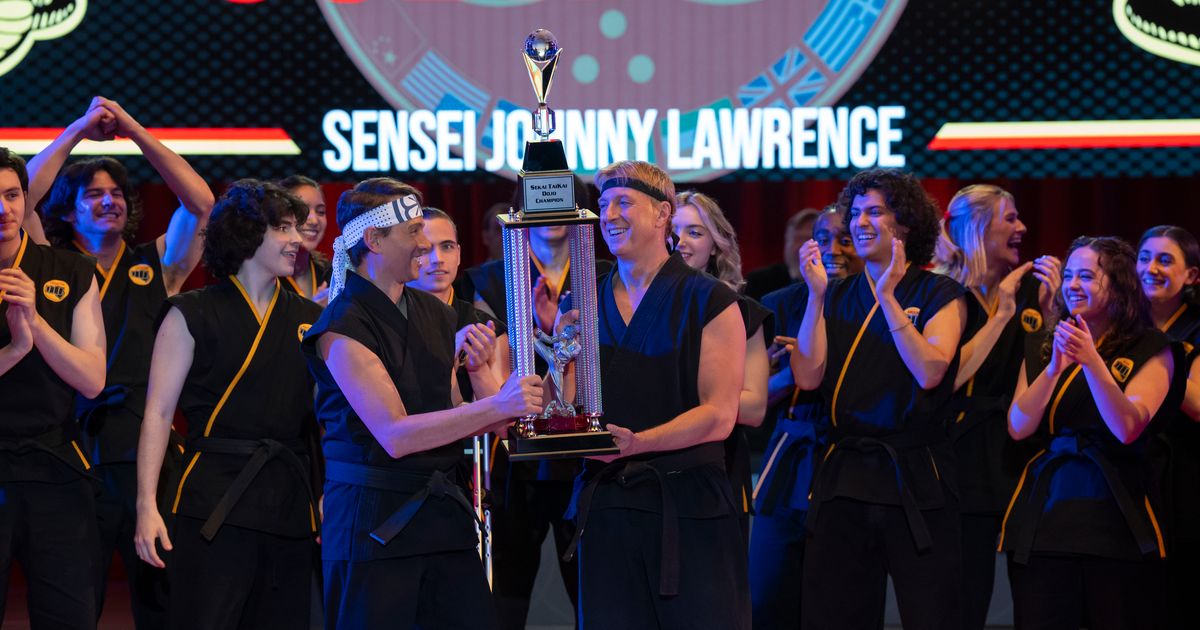
For the last part of this retrospective, I’d like to talk about the sixth and final season. It was an interesting season that was also a bit of a mixed bag with highs and lows all its own. There’s a lot to talk about, so I decided it needs its own section. Oh, and just be warned – this last part has spoilers.
Superfluous Season
At the end of season five, the Cobra Kai dojo was dissolved for good, all the Valley kids became good guys, rivalries were settled, and Terry Silver went to jail. The season finale even had Daniel’s three former bullies teaming up to fight badguys and adult Daniel finally performed the Crane Kick, giving us a memorable and action-packed finale. Many viewers remarked that this would’ve been a good way to cap off the entire series. The only major plot thread still lingering was the Sekai Taikai Tournament.
This tournament was essentially the Little League version of Bloodsport – a super secret and violent international tournament that somehow involved teenagers. As expected, the show had two seasons dealing with the All Valley Karate Tournament and those seasons were great since the personal stakes were always high, even though it was “only” a local karate tournament for teens. Even though the Sekai Taikai was a much larger tournament, there wasn’t anything at stake for the characters. The only reason why the heroes qualified at all was as a means to defeat Cobra Kai for good, which happened a few episodes later.
So anyway, season six was all about this tournament that the characters had no reason to care about but did anyway. The sixth season had a lot of episodes leading up to the tournament, so the writers decided to dredge up old rivalries or create new ones out of thin air. Remember how I said that characters going back and forth never got old or forced? Well, this season is the exception. I guess they had to make the Sekai Taikai look important.
Also, remember how I said Cobra Kai dissolved in the previous season? Well, the writers introduced us to the Korean wing of Cobra Kai who had been training in the forest all this time. Oh, and they’re being trained by the creator of Cobra Kai who would be over a century old by now and it’s barely addressed and never explained. It just got weird. But the random new bad guy introductions didn’t end there since there was an additional evil dojo that showed up for the tournament that was secretly led by Terry Silver who got out of prison thanks being a rich white guy. None of this was compelling and much of it was a rehash of better seasons.
And before we move on, I want to say they did my boy Robbie dirty. Robbie got screwed out of both All Valley Tournaments he was in, so I thought he’d win this one. For some reason, the writers had him get injured again.
But Those Last Few Episodes Were Gold
Okay, let’s end on a high note. One thing Seikai Taikai had going for it was that the tournament was mostly team-based. This made the contest unique and played to what was, in my opinion, one of the show’s strengths – the big dojo vs dojo brawls.
Additionally, this season gave us a heartfelt finale by bringing back most of the characters, old and new. It even managed to fit in one last reintroduction from the original series – Terry Silver’s henchman Denis from Karate Kid 3. Also, in keeping with the main theme of the show, John Kreese, of all people, had a redemption arc. It was fitting that his last act was making sure Terry Silver was dead and gone, even at the cost of his own life. This final act symbolically allowed Johnny to finally turn Cobra Kai into what it was always meant to be. I didn’t know a form of karate needed a redemption arc, but here we are.
As for Johnny, he got to have one more tournament match against an opponent played by the highly underrated Lewis Tan. I loved seeing Daniel in his corner as his sensei, giving him the Cobra Kai mantra. And of course, as a callback, Johnny did his own variation of the Crane Kick to score the final point – except it involved sweeping the leg.
So that’s it. That’s the series. It was a wild ride that I was happy to be on. It was pretty bittersweet saying goodbye to all these characters at the end and I hope the cast have plenty of roles on the horizon. Until next time – try to be the best ‘cause you’re only a man and a man’s gotta learn to take it!

